From Forgetfulness to Dementia: When Assisted Living Is Not Enough and Memory Care Is Required
Business Name: BeeHive Homes of Clovis
Address: 2305 N Norris St, Clovis, NM 88101
Phone: (505) 591-7025
BeeHive Homes of Clovis
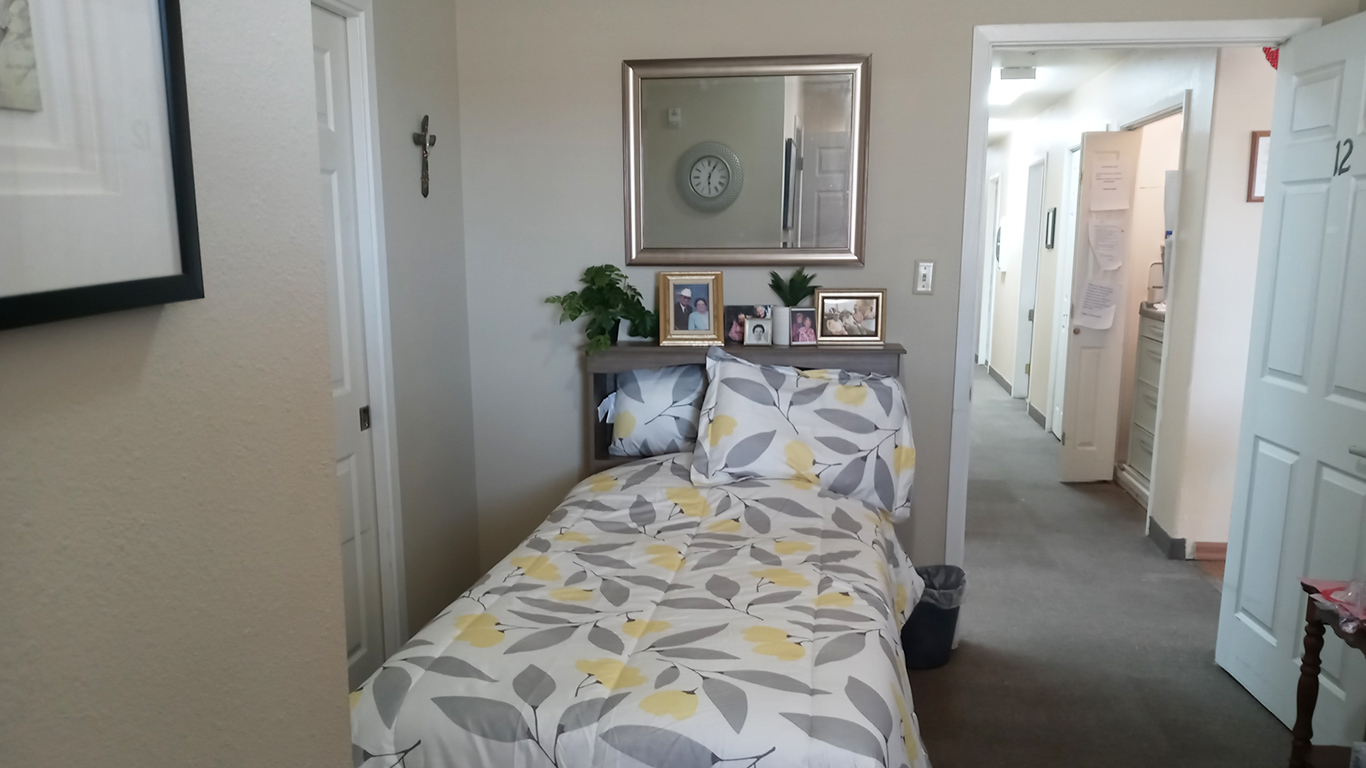
Beehive Homes of Clovis assisted living care is ideal for those who value their independence but require help with some of the activities of daily living. Residents enjoy 24-hour support, private bedrooms with baths, medication monitoring, home-cooked meals, housekeeping and laundry services, social activities and outings, and daily physical and mental exercise opportunities. Beehive Homes memory care services accommodates the growing number of seniors affected by memory loss and dementia. Beehive Homes offers respite (short-term) care for your loved one should the need arise. Whether help is needed after a surgery or illness, for vacation coverage, or just a break from the routine, respite care provides you peace of mind for any length of stay.
2305 N Norris St, Clovis, NM 88101
Business Hours
Families hardly ever wake up one early morning and decide, "It is time for memory care." The decision creeps in through a series of small but unsettling moments: a parent getting lost on a familiar route, a range left on, a call from assisted living about roaming at night. For many, the hardest part is understanding where the line is in between common lapse of memory, the support of conventional senior care, and the more customized structure of memory care.
I have sat at kitchen area tables with kids, children, and spouses as they wrestled with that exact question. The majority of were not trying to find a medical argumentation on dementia. They wanted something more useful: how to understand when assisted living is no longer enough, and what to expect if their loved one moves into memory care.
This short article is written from that vantage point: practical, experience-based, and concentrated on the real decisions families need to make.
Normal Aging, Mild Cognitive Changes, and Dementia: Untangling the Terms
One of the first challenges is vocabulary. Words like forgetfulness, dementia, Alzheimer's, and confusion get utilized interchangeably, yet they describe extremely different situations.
Normal aging includes some changes in memory and processing speed. A healthy older adult might forget a name, misplace reading glasses, or stroll into a space and question why they went there. These minutes are generally occasional, the person can still find out brand-new details, and life continues to run relatively smoothly.
Mild cognitive disability (MCI) describes a middle territory. Individuals with MCI have quantifiable issues with memory, language, or attention beyond what most people their age experience, however they can still handle most everyday jobs with minimal assistance. Somebody with MCI might rely more greatly on lists, pointers, or a partner keeping an eye on visits. This is often where families first think about assisted living or helpful senior care, specifically if there are likewise physical problems like balance issues or medication complexity.
Dementia is not a single disease however a group of symptoms including significant decrease in memory, reasoning, or other thinking skills that disrupts every day life. Alzheimer's illness is the most typical cause. Vascular dementia, Lewy body dementia, and frontotemporal dementia are other examples. The crucial distinction from normal aging is impact: dementia changes the ability to manage daily life safely.
In the very early phases of dementia, a person may still live fairly well in a traditional assisted living setting. In time, nevertheless, their requirements diverge from what general elderly care is built to provide.
What Assisted Living Does Well - And Where It Struggles
Assisted living is created around a versatile mix of independence and assistance. The majority of communities focus on:
- help with daily activities like bathing, dressing, and grooming
- medication pointers or administration
- meals, housekeeping, and laundry
- social activities, transport, and a sense of neighborhood
In my experience, assisted living works particularly well for older grownups who are physically frail, socially separated, or slightly cognitively impaired but still able to follow regimens, use call buttons, and reveal their requirements clearly.
Where these settings start to battle is not merely with "memory issues" however with the behavioral and safety changes that include moderate to sophisticated dementia. Common assisted living staffing patterns and developing styles presume locals can:
- recognize and navigate their environment
- respect borders like "do not enter" doors
- follow fundamental security guidelines
When those presumptions break down, everybody feels the pressure. Staff begin to call families more often about wandering, rejections of care, or intensifying agitation. Other homeowners might feel uncertain or perhaps frightened. The person with dementia might feel overwhelmed, misinterpreted, and continuously corrected.
Assisted living can include additional services, one to one caretakers, or behavioral strategies, however there is a point where the environment itself is no longer a match. That is when a dedicated memory care setting becomes not only suitable, but typically kinder.
Early Indication That Assisted Living Is No Longer Enough
Families typically request for a list, not because they desire a stiff answer, but because they need something to anchor their observations. No single indication indicates that memory care is required, yet patterns matter.
You might be approaching that limit if numerous of these issues continue even after trying sensible modifications:
- Safety concerns that keep repeating
- Unmanaged behaviors that interfere with others or distress your loved one
- Rapid cognitive or practical decline
- Increasing dependence on one employee or household caregiver just to "keep things okay"
- Calls from the neighborhood recommending they are "at the edge" of what they can handle
The details behind those points are what really direct the decision.
Safety problems beyond basic fixes
Repeated roaming, especially attempts to leave the building or go into other locals' spaces in the evening, is a key warning. Door alarms, picture hints, and extra supervision may work for a while, but if personnel are constantly redirecting the exact same individual, it is a clear indication that they require a more secure, dementia-focused environment.
Other security issues include poorly utilizing devices, discarding medications, or forgetting how to use mobility aids. When personnel spend more time preventing accidents than supporting engagement, the match between individual and setting has tilted.
Behavior and psychological distress
Assisted living personnel get some dementia training, however their model is not built around the specialized behavioral care needed when dementia advances. Common scenarios include:
A resident who ends up being verbally aggressive during bathing, not out of hostility, however fear or confusion about what is taking place. Personnel begin to dread assisting them, and the resident wind up bathed less often.
An individual who believes personnel are "taking" from them since they can not remember where they placed items. This can spiral into accusations, 911 calls, or conflicts with neighbors.
Repetitive calling out, following staff everywhere, or extreme stress and anxiety when alone. Staff may label this "attention looking for," however it typically reflects deep insecurity and disorientation.
Memory care communities are not magic, but their entire design is developed to understand and respond to these patterns utilizing structured routines, environmental hints, and specialized communication strategies.
Physical decline mixed with cognitive loss
A resident might require more hands-on assistance transferring, toileting, or eating while at the exact same time losing the capability to follow guidelines or stay seated securely. This double decrease pressures standard assisted living. Falls increase. Staff struggle to maintain. Families feel pulled in between proficient nursing, memory care, or home-based solutions.
In those cases, I frequently ask two questions:
First, can the present setting keep this person both safe and engaged without amazing measures?
Second, has the community successfully maxed out their service alternatives, or are they still able to increase support?
If the answer to the first is "no" and to the second is "we have done all we can," it is time to seriously check out memory care.
What Memory Care Truly Provides, Beyond a Locked Door
Many households consider memory care mostly as "protected" or "locked," and it is true that a regulated exit system becomes part of the design. But if that is all a community provides, you are not taking a look at genuine memory care, just security.
Authentic memory care lines up the environment, staffing, programming, and daily rhythm with the requirements of people coping with dementia.
Environment that reduces confusion, not just restricts movement
An excellent memory care neighborhood uses visual cues, easy designs, and consistent design to help citizens orient themselves. Instead of long, hotel-like corridors, you might see smaller households with circular strolling courses to support safe roaming, shadow boxes outside spaces with personal products, and contrasting colors for toilets, plates, and doorways.
Noise levels tend to be lower, lighting softer and more even, and mess decreased. These details appear little, however for someone who is quickly overstimulated or confused, they make a huge difference in between agitation and relative calm.
Staff training and ratios customized to dementia
Staff in memory care receive more intensive training in dementia interaction, nonpharmacologic habits management, and significant engagement. They are taught to translate habits as expressions of unmet requirements, not as "issues to stop."
Staffing ratios are often tighter than in basic assisted living, although specific numbers differ by state and community. The practical result is that caretakers can take more time with each resident, technique care more flexibly, and react quicker to early indications of distress.
Structure that feels foreseeable, not rigid
People with dementia frequently function much better with a consistent everyday rhythm. Memory care programs normally construct the day around duplicating patterns: meals served at the same time, morning regimens followed in a consistent order, regular quiet durations, and life enrichment activities adjusted to ability.
The goal is not to "keep citizens busy" but to offer their nervous system a predictable map. When the day feels more knowable, stress and anxiety declines and challenging habits frequently soften.
Activities constructed for success, not failure
Standard senior activities, like long lectures or complicated games, can frustrate somebody with moderate dementia. Effective memory care shifts towards much shorter, sensory rich, and failure totally free engagement: familiar music, folding towels, easy crafts, sorting tasks, outdoor gardening, and reminiscence groups.
The finest programs are not childish. They are considerate, tuned to adult interests, and adjusted in trouble so that locals can get involved with a sense of competence.
The Psychological Obstacle: "Are We Quiting?"
Families often view the move to memory care as confessing defeat. I have actually heard grown children state, with tears in their eyes, "I feel like I am sending her away." This psychological weight is real and should have honest attention.
Three reframes can help.
First, recognize that requirements have actually altered, not your dedication. Choosing a setting that much better matches your loved one's brain function is an act of adjustment, not abandonment. You are still the choice maker, historian, and psychological anchor, even if specialists supply day to day care.

Second, understand that memory care can really restore self-respect. In assisted living, a resident whose dementia has actually advanced may be continuously fixed: "No, your hubby is not alive any longer," "No, you already had lunch," "You can not go there." In a memory care program, staff are most likely to validate feelings, sign up with the individual's reality when safe, and form the environment to their current abilities.
Third, see the relocation as securing relationships. When family members try to provide extensive dementia care themselves or pressure assisted living to stretch beyond its style, resentment and burnout generally follow. Memory care can protect your role as daughter, son, or spouse instead of turning you into a full time crisis manager.
Using Respite Care to Test and Transition
Respite care is often overlooked in this discussion, yet it can be an indispensable bridge. Lots of memory care communities and some assisted living communities offer short term stays, anything from a few days to numerous weeks.
Respite can serve three essential functions.
It offers family caregivers a possibility to rest and address their own health or work demands, while their loved one receives 24 hour support in a safe environment. For caregivers who have actually been "on task" day and night, this can literally be life saving.
It allows the community to examine your loved one in a realistic method. A 2 hour tour tells you very little about how someone with dementia will function in a brand-new setting. A week of respite exposes patterns: Do they settle into routines? Exist behavioral challenges? What adaptations assist most?
It offers a gentler transition. Some homeowners who fiercely resist the concept of "moving" are more available to a short "visit" or "stay while I am taking a trip." If the experience goes well, that short-term frame can evolve into a longer term placement with less distress.
Respite care is also valuable if you are comparing a number of neighborhoods. Instead of choosing based upon design and marketing, you can see how your loved one in fact responds.

When Remaining Becomes More Dangerous Than Moving
A typical argument versus relocating to memory care is, "Modification will just confuse them more." This issue is valid. Moving can activate momentary worsening of confusion, particularly in the very first days or weeks. Routine interruptions are tough for a damaged brain to process.
The practical question, however, is not whether modification is hard, however whether staying is much safer and more encouraging than moving. In many cases, the status quo brings its own hidden dangers:
A resident who continues to stroll into hazardous locations due to the fact that doors are not protected or monitored.
A person who isolates in their space due to the fact that the larger assisted living environment feels frustrating, gradually losing physical strength and social connection.
Staff doing the bare minimum due to the fact that they run out concepts, overextended, or simply not set up for specialized dementia care.
If the current setting leaves your loved one often scared, puzzled, or at physical risk in spite of excellent faith efforts to adapt, then the short-term disorientation of a relocation might be exceeded by the longer term advantages of a really dementia friendly space.
Practical Concerns to Ask a Memory Care Community
Tours can be slick. To get past the surface area, it helps to ask concentrated concerns and listen not only to the responses, but to how with confidence and particularly they are given.
Here work concerns to bring along, in any order that feels natural:
- How do you customize look after various types or stages of dementia, not simply "memory issues" in basic?
- What is your technique when a resident is withstanding care or becoming upset? Can you provide a recent example and how personnel managed it?
- How do you keep families informed about changes, and what does cooperation look like when behavior or medical problems develop?
- What training do your staff receive in dementia care, how typically is it upgraded, and exist lead staff with sophisticated expertise?
- Can my loved one age in place here, even if they end up being nonverbal, incontinent, or bedbound, or would they likely need to move once again?
It is sensible to likewise inquire about personnel turnover, usage of antipsychotic medications, end of life policies, and how they support locals with multiple medical conditions, not only cognitive impairment.
Balancing Cost, Resources, and Family Capacity
Memory care is more expensive than standard assisted living in many areas. The higher cost shows more extensive staffing and specialized shows. For lots of households, price shapes choices as much as clinical need.
This is where a frank conversation with the neighborhood's monetary therapist, a social employee, or a geriatric care supervisor can assist. Topics typically include:
Private pay resources and the length of time they are most likely to last at current rates.
Eligibility for long term care insurance benefits, if a policy exists.
Veterans benefits, especially Help and Attendance, which can support some senior care costs.
Potential Medicaid protection for memory care, which differs widely by state and program.
Families sometimes spread themselves thin trying to avoid the expense of memory care by filling spaces with unsettled caregiving. It is necessary to weigh that against lost wages, health influence on caregivers, and the threats of an increasingly risky arrangement. There is no single right answer, only a series of trade offs that deserve honest calculation.
When to Seek Expert Guidance
Trust your instincts, but do not count on them alone. If you see a pattern of decrease, increased calls from assisted living, or unpleasant worry that your loved one is no longer safe, bring in professional perspectives.
A geriatrician, neurologist, or psychiatrist experienced in dementia can help clarify diagnosis and phase. This matters because early behavioral changes from something like frontotemporal dementia may be misread as "stubbornness" or "personality" in an assisted living environment.
A certified social employee, geriatric care supervisor, or senior care consultant who is not used by any specific neighborhood can offer more neutral guidance. They see many households walk this course and can often share what has worked for others in similar situations.
Legal and financial specialists play a parallel function. If you have actually not yet completed powers of lawyer, updated wills, or clarified who can make health decisions when your loved one can not, this is the time to act. Memory care is not just about the next few months, however the long arc of declining capacity.
Holding On to the Person Inside the Disease
At the heart of all these choices is a simple human truth: dementia modifications abilities, however it does not remove personhood. The risk, in both assisted living and memory care, is that staff start to see residents as a collection of tasks instead of an entire life.
Families can help defend against that by sharing stories, choices, and history. When you satisfy the memory care group, speak about what your loved one did for work, what made them happy, what foods they valued or loathed, what music relaxes memory care clovis nm or thrills them, what regimens anchored their days.
Bring pictures, preferred books, or well used products from home. These are not simply comfort objects; they are anchors for identity. Personnel who know that your father was an engineer will connect in a different way when he begins "fiddling" with equipment. They may see it as an expression of proficiency, not misbehavior.
Even as functions shift, your ongoing existence matters. Visits, phone calls when appropriate, and participation in care conferences keep you woven into the material of daily life. Memory care works best when it is a partnership: professionals offering structure, families providing continuity of love and story.
A Peaceful Threshold, Not a Single Moment
The move from lapse of memory to dementia, from assisted living to memory care, seldom takes place easily. Many families only acknowledge the threshold in hindsight. Before that, they reside in the grey zone: attempting another method, another assistance, another promise that "we can handle just a little longer."
If you read this while wrestling with that unpredictability, remember three directing questions:
Is my loved one safe in their existing environment, not just from apparent physical damage but from consistent distress and confusion?
Is the current senior care setting truly geared up, by design and staffing, to satisfy their evolving needs?
Is the caregiving arrangement sustainable for the people who enjoy them, not simply this week, however over the next year or two?
When the honest answer to those questions tilts towards "no," memory care is worthy of a serious, open minded appearance. Not as a failure of household responsibility, however as the next, more customized chapter in a journey that none of you picked, yet all of you are strolling together.
BeeHive Homes of Clovis provides assisted living care
BeeHive Homes of Clovis provides memory care services
BeeHive Homes of Clovis provides respite care services
BeeHive Homes of Clovis supports assistance with bathing and grooming
BeeHive Homes of Clovis offers private bedrooms with private bathrooms
BeeHive Homes of Clovis provides medication monitoring and documentation
BeeHive Homes of Clovis serves dietitian-approved meals
BeeHive Homes of Clovis provides housekeeping services
BeeHive Homes of Clovis provides laundry services
BeeHive Homes of Clovis offers community dining and social engagement activities
BeeHive Homes of Clovis features life enrichment activities
BeeHive Homes of Clovis supports personal care assistance during meals and daily routines
BeeHive Homes of Clovis promotes frequent physical and mental exercise opportunities
BeeHive Homes of Clovis provides a home-like residential environment
BeeHive Homes of Clovis creates customized care plans as residents’ needs change
BeeHive Homes of Clovis assesses individual resident care needs
BeeHive Homes of Clovis accepts private pay and long-term care insurance
BeeHive Homes of Clovis assists qualified veterans with Aid and Attendance benefits
BeeHive Homes of Clovis encourages meaningful resident-to-staff relationships
BeeHive Homes of Clovis delivers compassionate, attentive senior care focused on dignity and comfort
BeeHive Homes of Clovis has a phone number of (505) 591-7025
BeeHive Homes of Clovis has an address of 2305 N Norris St, Clovis, NM 88101
BeeHive Homes of Clovis has a website https://beehivehomes.com/locations/clovis/
BeeHive Homes of Clovis has Google Maps listing https://maps.app.goo.gl/SMhM3zbKaKgR1UAX6
BeeHive Homes of Clovis has TikTok page https://tiktok.com/@beehivehomes_clovis
BeeHive Homes of Clovis has Facebook page https://www.facebook.com/beehiveclovis
BeeHive Homes of Clovis has Instagram page https://www.instagram.com/beehivehomesclovis/
BeeHive Homes of Clovis has an YouTube page https://www.youtube.com/@WelcomeHomeBeeHiveHomes
BeeHive Homes of Clovis won Top Assisted Living Homes 2025
BeeHive Homes of Clovis earned Best Customer Senior Service Award 2024
BeeHive Homes of Clovis placed 1st for Senior Living Communities 2025
People Also Ask about BeeHive Homes of Clovis
What is BeeHive Homes of Clovis Living monthly room rate?
The rate depends on the level of care that is needed. We do a pre-admission evaluation for each resident to determine the level of care needed. The monthly rate is based on this evaluation. There are no hidden costs or fees
Can residents stay in BeeHive Homes until the end of their life?
Usually yes. There are exceptions, such as when there are safety issues with the resident, or they need 24 hour skilled nursing services
Do we have a nurse on staff?
No, but each BeeHive Home has a consulting Nurse available 24 – 7. if nursing services are needed, a doctor can order home health to come into the home
What are BeeHive Homes’ visiting hours?
Visiting hours are adjusted to accommodate the families and the resident’s needs… just not too early or too late
Do we have couple’s rooms available?
Yes, each home has rooms designed to accommodate couples. Please ask about the availability of these rooms
Where is BeeHive Homes of Clovis located?
BeeHive Homes of Clovis is conveniently located at 2305 N Norris St, Clovis, NM 88101. You can easily find directions on Google Maps or call at (505) 591-7025 Monday through Sunday 9:00am to 5:00pm
How can I contact BeeHive Homes of Clovis?
You can contact BeeHive Homes of Clovis by phone at: (505) 591-7025, visit their website at https://beehivehomes.com/locations/clovis/ or connect on social media via TikTok Facebook or YouTube
Take a drive to Cotton Patch Cafe. Cotton Patch Café serves homestyle comfort food suitable for assisted living, memory care, senior care, elderly care, and respite care family meals.